
Zenergy Insight Series - Pete Zmuda (West Gate Tunnel Project)
Pete Zmuda- West Gate Tunnel Project

The Zenergy Insights series, now in its 5th year, is an interview series where we highlight and profile leaders in the health, safety & sustainability industry in Australian workplaces. 


The Zenergy Safety Health & Sustainability team sat down with Pete Zmuda.


Pete, thanks for taking the time to answer some of our questions to share your views with our readers. To get things into perspective as to who you are, and how you fit in, you are the new Safety Director for the West Gate Tunnel Project, a 10 Billion Dollar Infrastructure project in West Melbourne. Tell me a bit about what that involves?

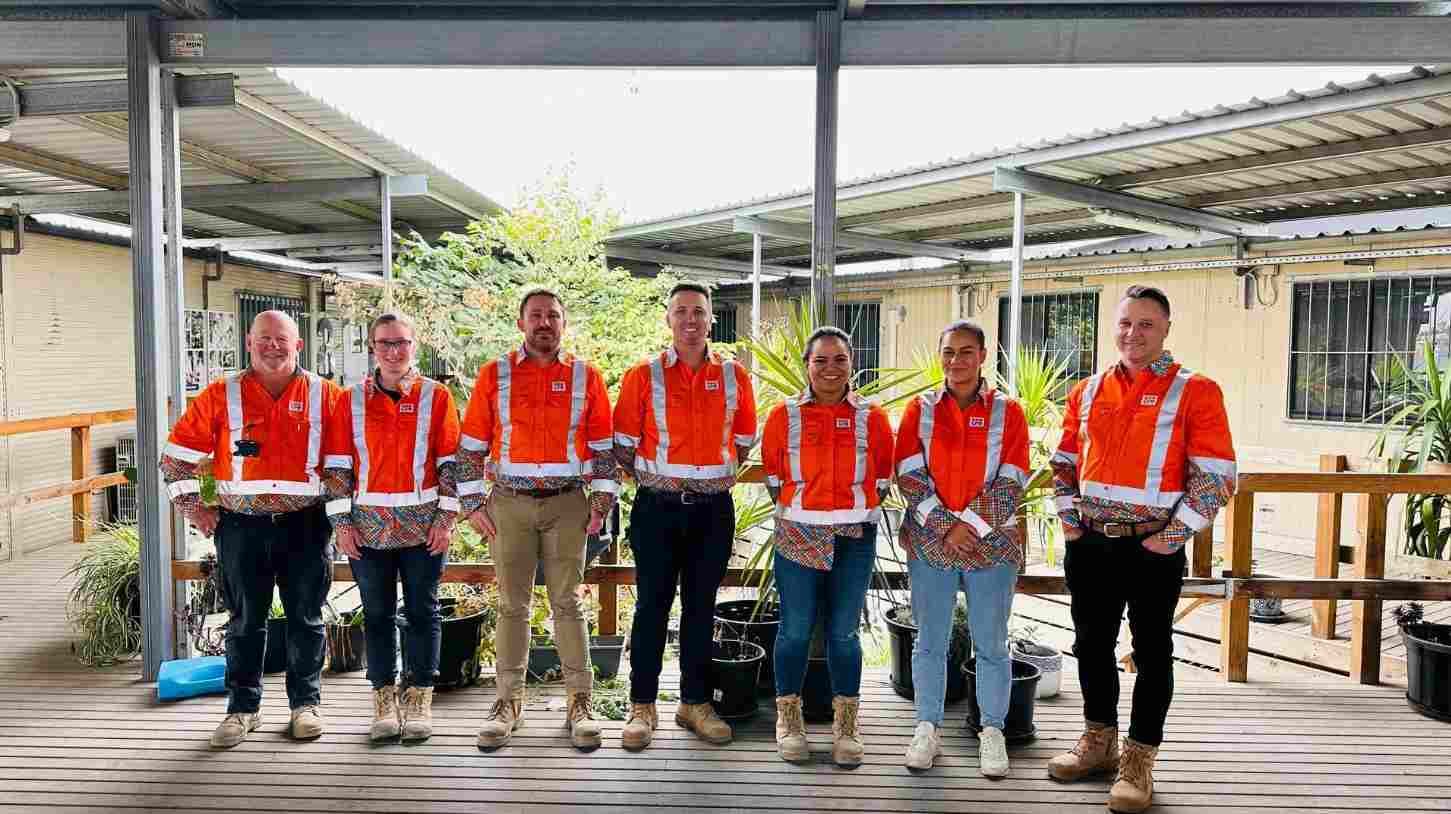
The West Gate Tunnel Project includes twin tunnels and an elevated motorway connecting the West Gate Freeway with the Port of Melbourne, CityLink and the city. It provides an alternative crossing of the Maribyrnong River to the West Gate Bridge and also involves upgrades to the road connections and the widening of the West Gate Freeway from the M80 Ring Road and Princes Freeway to Williamstown Road. I’ve recently taken on the role of Safety, Health, Environment and Training Director for the West Gate Tunnel Project and in addition to those functions I also take ownership of the project’s sustainability and permit teams. It’s a big job on a mega-project and I’m fortunate to have an amazing team to help deliver our part of a city changing infrastructure project.


As general overview, how did you end up getting into the WHS space as a professional in the first place and what kept you in it?

My interest in safety started when I took on a role as a Health and Safety Representative whilst working at the Animal Welfare League NSW. With that new-found interest and having a background in investigations, I landed a role as an investigator with Comcare and later a role with a large construction company as a Safety Advisor. Construction and infrastructure projects are amazing to be a part of in that you’re able to transition across industries to deliver different projects and keep learning along the way. I’ve been lucky enough to work across rail, roads, water jobs, heavy civil with drill and blast, commercial construction and others as well as moving into more corporate roles. It’s this constant change and continually learning that keeps me engaged and it’s always the people you work with that keep you in the job.


What have you found to be the biggest learning experience since starting your career in Safety?

Trying new things and pushing yourself outside your comfort zone is where the learning happens for me, but that’s probably the obvious answer. I’ve worked for and with some amazing people from whom I’ve learnt a great deal on my way up in my career and now I’m continuing to learn from the younger generations around me on what matters to them and what they need from a manager and leader. So, there’s something to be said for sticking with a manager and team you’re comfortable with, but gaining exposure to as many different people, styles, opinions and values offers more opportunity for you to learn and grow.


There is quite a lot of moving parts, and of course various risks involved in a mega project like the WGTP, how have you kept the team onboard with Safety, and keeping Safety a focus?

 I’m fortunate that I’ve taken on a role from others that have set the project up to be in a good space and with a leadership team and broader supervisory team that has a real focus on safety and critical risks. In general, it’s easy to overload the team with Safety, Health and Environment stuff. The trick is to influence the culture with clear communications, setting high standards, challenging teams to improve and providing the support necessary for the teams to effectively manage risks. One of my favourite managers once said to me, ask yourself does it make it safer? If the answer is no, why are we doing it?


As someone with many years of experience within the industry, and exposure across some great talent, what do you look for with new recruits?

 We can teach the technical elements of good SH&E management, but a good work ethic and the emotional intelligence to build effective and influential working relationships is much harder to find in a person you don’t know. 


What suggestions or advice would you have for people trying to get into the industry?

 There are probably two things. Firstly, it’s your reputation that’ll get your foot in the door not what you know, so get yourself in front of as many people as you can. It’s a very small industry. Get to networking events, attend the AIHS forums, put yourself out there and the right manager will recognise potential and your work ethic and give you a go. Secondly, don’t let imposter syndrome get you. Back yourself. Confidence will take you a long way as long as it’s with a healthy dose of humility.


How do you find balance in your week, considering career and life, and what's your go to, to switch off?

I have mixed feelings about this question. Work-life balance, work-life integration and all of these types of phrases seem loaded to me. Right now, I love my work and I don’t really feel a need to switch off but when times are stressful, I do have a few of ways to keep on top of that. Every night my wife and I walk the dog and decompress about our day – it’s not about fixing each other’s problems, just having an opportunity to vent knowing that we each understand what is going on is our lives makes a huge difference. Chuck in some good food, good company and being as active as I can in a very busy schedule helps find the right balance that is right for me.

Pete Zmuda - Safety, Health, Environment & Training Director
Contact Us

Zenergy News

WHS news Australia
By Dean Woods • October 25, 2026
This week: the Best Practice Review of the model WHS laws, new Clerks Award work-from-home rules, job market data and a featured Sydney HSE Manager role.
Best Practice Review model WHS laws
By Dean Woods • October 25, 2026
Safe Work Australia's first national WHS review since 2018 makes 21 recommendations. What they cover and what HSE leaders should do before they become law.
Fake Safety Certificates: An HSE Hiring Wake-Up Call
By Dean Woods • October 19, 2026
WorkSafe Victoria is investigating fake safety qualifications. How employers should verify tickets, licences and real competency when hiring HSE talent.
Zenergy Take 5: WHS News for the Week of 19 October 2026
By Dean Woods • October 19, 2026
Queensland’s psych injury claims shake-up, fake safety certificates under investigation, fresh job market data and this week’s featured HSE role.
Zenergy Congratulates the 2026 AWHSA Finalists
By Dean Woods • October 13, 2026
Zenergy is proud to sponsor the 2026 Australian Workplace Health & Safety Awards. Meet the 52 finalists ahead of the Sydney gala on 12 November.
By Dean Woods • October 13, 2026
Welcome to Take 5, Zenergy's weekly five-minute scan of what's moving in Australian workplace health and safety, workers compensation and people & culture — five items, one featured senior role, every source named. This week: a hard regulatory deadline lands on the calendar, Safe Work Month hits its stride, and Safe Work Australia publishes the clearest picture in years of who is actually exposed to harm at work. 1. New workplace exposure limits commence 1 December — including Australia's first diesel particulate limit The transition period for Safe Work Australia's updated workplace exposure limits (WELs) for airborne contaminants ends on 1 December 2026. The list introduces Australia's first national exposure limit for diesel particulate matter — 0.01 mg/m³, measured as respirable elemental carbon — alongside revised limits for a range of other contaminants. Regulators are telling duty holders to use the remaining weeks to review exposure monitoring, confirm controls are effective, and prioritise elimination and engineering controls over reliance on RPE. If your operations involve diesel plant in enclosed or poorly ventilated environments — distribution centres, tunnels, underground mining, workshops — this is the compliance item to table at your next leadership meeting. Safe Work Australia has published guidance and a transition toolkit, and state regulators including SafeWork SA have flagged the change, as has NOPSEMA for offshore operators. Sources: Safe Work Australia — Changes to Workplace Exposure Limits (safeworkaustralia.gov.au); SafeWork SA — Get ready for new Workplace Exposure Limits (safework.sa.gov.au); NOPSEMA — Diesel engine emissions: new workplace exposure limit takes effect December 2026 (nopsema.gov.au). 2. Dates ahead: Safe Work Month's “for health” week and World Mental Health Day National Safe Work Month is underway, with Safe Work Australia's 2026 theme “Safe work is for life” running week-by-week focuses: “for health” (week two, this week), “for the future” (week three) and “for all” (week four). World Mental Health Day falls on Saturday 10 October, inside Mental Health Month — a natural prompt to put psychological health on the toolbox agenda, not just the poster wall. Regulators are active too: SafeWork NSW opened the month with a compliance operation targeting the meat processing sector. Sources: Safe Work Australia — National Safe Work Month (safeworkaustralia.gov.au/national-safe-work-month); SafeWork NSW — news, 1 October 2026 (safework.nsw.gov.au). 3. People & culture: FWO recovers $453 million for workers in 2025–26 The Fair Work Ombudsman's 2025–26 results, released 14 September, show $453 million recovered for underpaid workers across the year, with Ombudsman Anna Booth urging employers to find “compliance common ground”. For employers, the signal hasn't changed: payroll governance, award classification and record-keeping sit alongside WHS as enterprise-level compliance risks — and the regulator's recovery capability keeps growing. Worth a standing item on the people & culture risk register, especially for businesses with large award-covered or labour-hire workforces. Source: Fair Work Ombudsman media release, 14 September 2026 (fairwork.gov.au/newsroom). 4. Job market pulse: national vacancies ease, HSE demand holds The ABS's August 2026 Job Vacancies figures (released 1 October) show 325,000 vacancies nationally — down 0.9% over the quarter and 1.3% over the year, and 31.2% below the May 2022 peak. Private sector vacancies fell 2.0% for the quarter while public sector vacancies rose 7.8%. Health care and social assistance remains the deepest vacancy pool at 54,300. Against that gently easing backdrop, safety hiring is holding its ground from WHS advisors in Melbourne manufacturing to safety leadership in Queensland logistics — a spread we read as steady, sector-broad demand for proven operators rather than a hiring spike. Sources: ABS — Job Vacancies, Australia, August 2026 (abs.gov.au); 5. Industry story of the week: 68% of workers likely exposed to at least one hazard Safe Work Australia's newly published Worker Exposure Survey finds 68% of Australian workers are likely exposed to at least one physical or chemical hazard at work, with 28.9% experiencing high-level exposure. Solar UV is the most common hazard (an estimated 4.87 million workers), silica exposure covers an estimated 2.04 million workers and is heavily concentrated in construction and mining, and apprentices and trainees are disproportionately exposed across heat, silica, lead and asbestos. Construction, agriculture and mining are the industries most likely to see multiple hazard exposure. It's the week's most important read for HSE leaders — and the subject of this week's Zenergy deep-dive, where we unpack what the numbers mean for exposure monitoring, young-worker supervision and the 1 December exposure limit deadline. Sources: Safe Work Australia — Worker Exposure Survey (safeworkaustralia.gov.au); Safety Solutions, 28 September 2026 — “Over two-thirds exposed to a physical or chemical hazard, workers survey reveals”
More Posts