
2024 Zenergy Leaders forum in Sydney CBD

Zenergy were proud to host 150 clients at the 2024 Zenergy Leaders forum in Sydney CBD last Thursday. Over breakfast on a wet Thursday morning, the attendees made up of industry leaders and executives, discussed how organisations are identifying, preventing and managing psychological risks, and what best practice looks like in a practical sense.
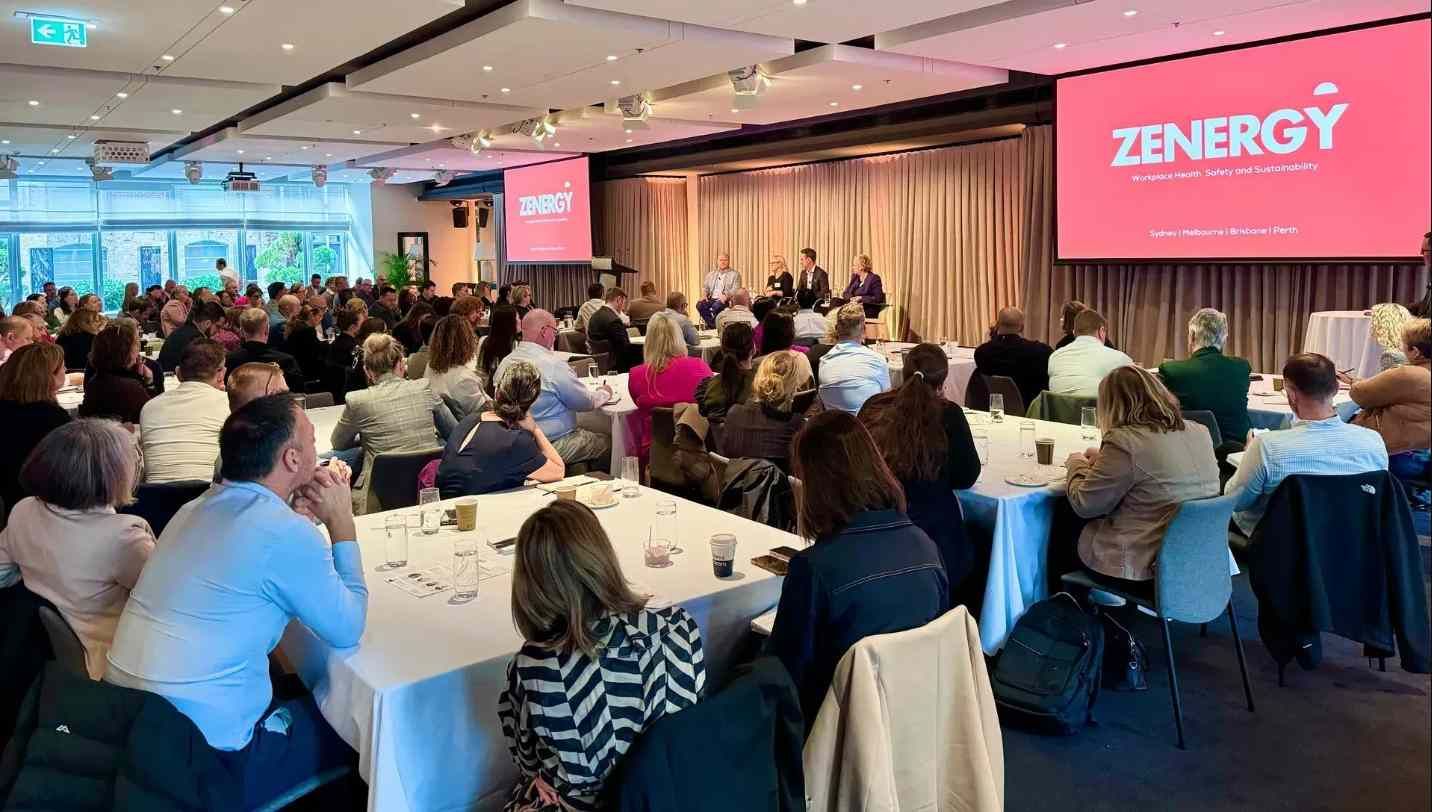

The panel were excellent and we would like to thank them for their contribution. 


Deloitte Australia's chief human resources officer, Tina McCreery told Zenergy Group's leaders forum in Sydney yesterday that her "big four" accounting firm's new interventions target the risks associated with the way its workers work on both organisational and individual levels, but the strategies for the latter have the greatest impact.


She said Deloitte started identifying the psychosocial "hotspots" in its business two years ago, "getting underneath" the day-to-day issues impacting on workers' psychosocial wellbeing.


The firm is part of an industry that has been under the spotlight for its culture of overwork, including through an independent review that heard many EY Oceania workers were subjected to "insane pressure" and unreasonable project deadlines (see related article).


McCreery told the forum that at the organisational level, Deloitte carried out engagement surveys, trained partners on mental health and engaged the executive board on these issues.


However, the protective measures the company implemented on the ground level, to manage the time workers spend on projects for clients, really made a difference, she said.


Deloitte introduced a range of interventions, including steps to determine at the start of an engagement what the project will look like in terms of flexibility needs, hours of work and contact hours, she explained.


It leveraged technology to solve some of the issues around the risks, including bots that can identify unreasonable hours and alert workers' "coaches" to step in and check in with an overworking individual "and see what is going on".


Other initiatives like "coaching conversations" mean workers are regularly asked how their work is impacting on their wellbeing, and any red flags are "routed to people to step in", McCreery said.


The "big shift" resulting from the intervention is that workers now feel comfortable raising psychosocial issues and are aware of all the escalation paths, so they are "putting their hands up much more" when they are not coping.


Fellow panellist Louisa Hudson, safety, security and wellbeing executive at Telstra, said companies can strike a good balance between individual and organisational level approaches.


She used organisational change as an example of a psychosocial hazard.


Organisational measures for this hazard include risk assessing and designing the change, taking into account all the factors that are likely to cause workers harm if it is not managed well, she said.


This could include the design of the change, the timeframe, and how the company will communicate with workers.


"Then you come down to that individual level and say... How will that change be felt at a local level?" Hudson said.


Companies need to consider how to ensure they understand what the vulnerabilities on the individual worker level will be to the change, in terms of things like workload, introduction of new processes, and introduction of new technology, she said.


They need to consider what to put in place to mitigate those risks.


Further, companies need to ensure they are educating and building the capacity of the workforce to understand the basics of psychosocial risk.


David Burroughs, Director at Australian Psychological Services, told the forum that 95 per cent of workers' psychosocial issues can be managed by with good leaders if they can identify the risks involved in the matter, whether they involve things like role clarity, reward and recognition, or role conflict.


"The space can be overcomplicated," he said.


If companies have leaders who understand what good work looks like, how their behaviour influences people's experience of working, and how to have a conversation around the actual work, they can solve most of the issues at that "localised level", Burroughs said.
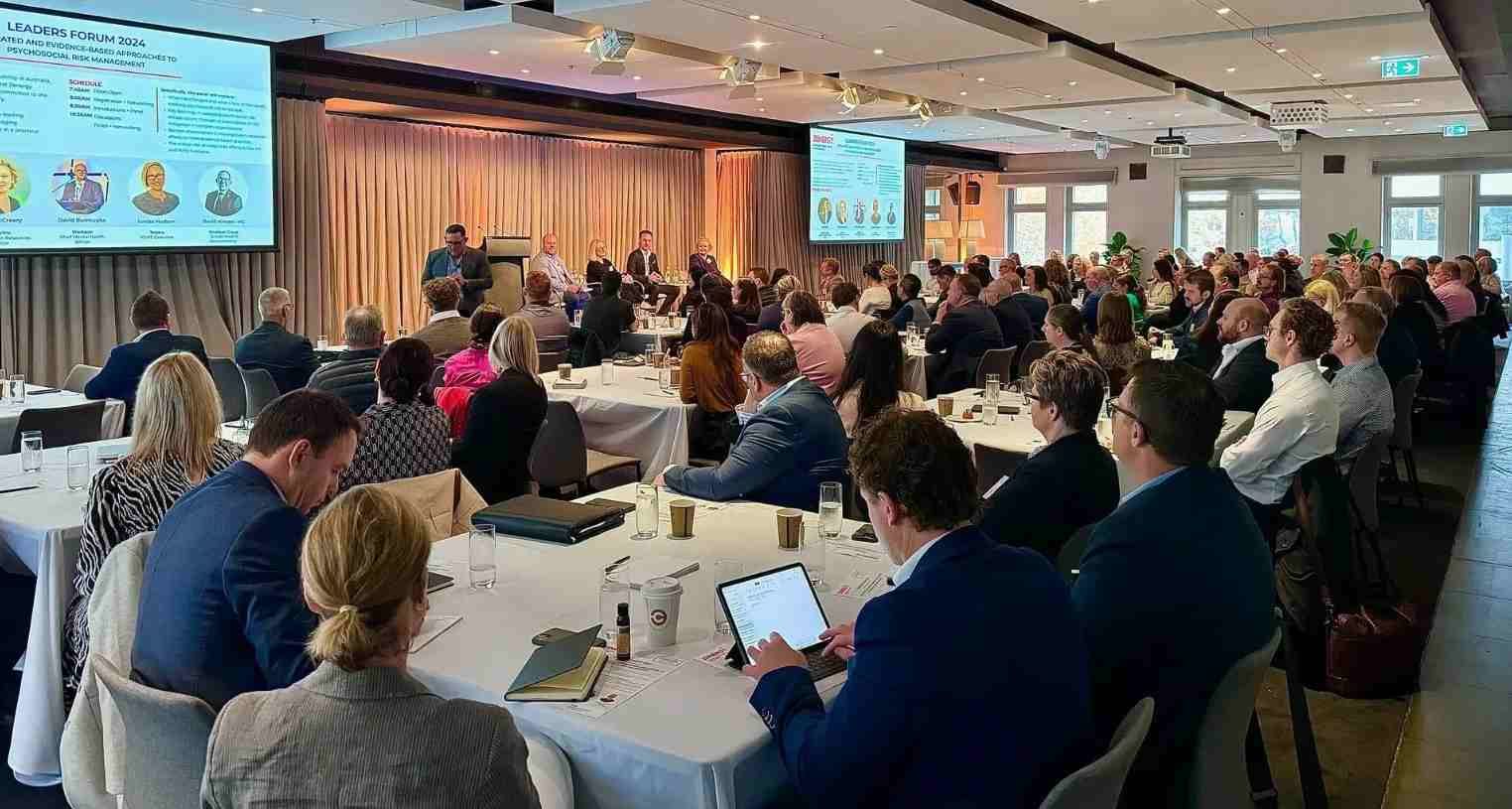

Zenergy Leaders forum.
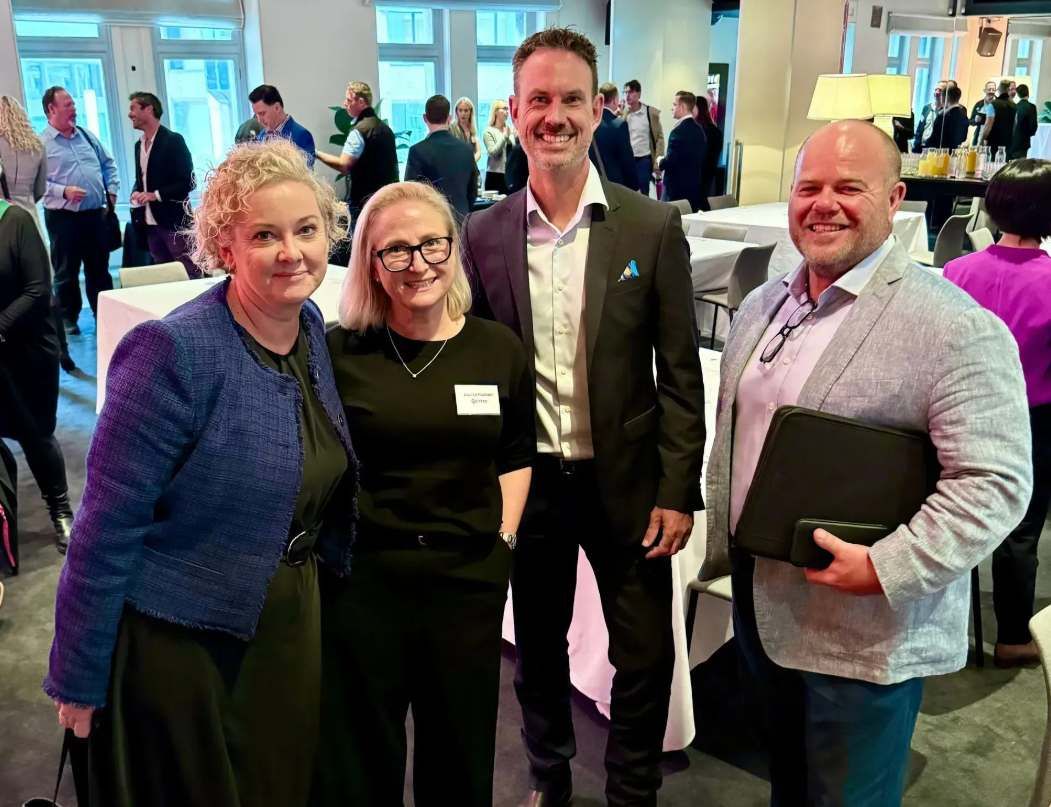
Pictured here, the Panel members. Left to right:


Panel Members:

  • Tina McCreery – Deloitte, Chief Human Resources Officer  (LinkedIn)
  • Louisa Hudson - Telstra, HSWE Executive  (LinkedIn) 
  • Jim Kelly - SafeWork NSW, Director Health & Safe Design (LinkedIn) 
  • David Burroughs – Westpac, Chief Mental Health Officer  (LinkedIn) 


If you would to get in touch with any of the panel please contact your account manager at Zenergy 
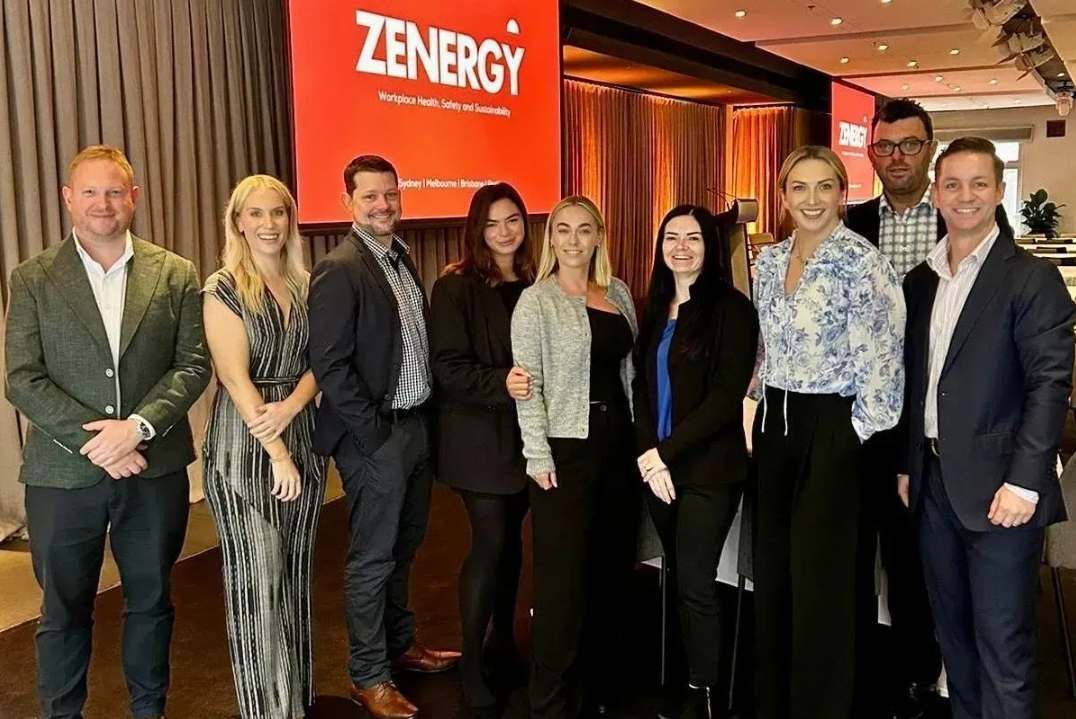
Pictured here, the Zenergy team. Left to right: Garry Kelly, Megan Lively, Daniel Clancy, Giulia Giovagnoli, Devon Lowe, Charlene Galea, Kathleen Melville, Dean Woods, Jason O'Dowd.


Sample of documents from panel discussion 


Safework NSW - Managing Psychosocial Hazards At Work

https://www.safework.nsw.gov.au/resource-library/list-of-all-codes-of-practice/codes-of-practice/managing-psychosocial-hazards-at-work

https://www.safework.nsw.gov.au/hazards-a-z/mental-health#regulations


Comcare against ADF - Charges over psychosocial risks to ADF member

https://www.comcare.gov.au/about/news-events/news/charges-over-psychosocial-risks#:~:text=Comcare's%20investigation%20identified%20alleged%20failures,a%20formal%20mental%20health%20assessment


Fairwork - Variation of modern awards to include a right to disconnect

https://www.fwc.gov.au/hearings-decisions/major-cases/variation-modern-awards-include-right-disconnect


Worksafe QLD - Psychosocial risk assessment tool

https://www.worksafe.qld.gov.au/__data/assets/pdf_file/0027/19476/psychosocial-risk-assessment.pdf


Psychological Health and Safety Strategy 2024-2026

https://www.safework.nsw.gov.au/resource-library/mental-health/psychological-health-and-safety-strategy-2024-2026

Contact Us

Zenergy News

WHS news Australia
By Dean Woods • October 25, 2026
This week: the Best Practice Review of the model WHS laws, new Clerks Award work-from-home rules, job market data and a featured Sydney HSE Manager role.
Best Practice Review model WHS laws
By Dean Woods • October 25, 2026
Safe Work Australia's first national WHS review since 2018 makes 21 recommendations. What they cover and what HSE leaders should do before they become law.
Fake Safety Certificates: An HSE Hiring Wake-Up Call
By Dean Woods • October 19, 2026
WorkSafe Victoria is investigating fake safety qualifications. How employers should verify tickets, licences and real competency when hiring HSE talent.
Zenergy Take 5: WHS News for the Week of 19 October 2026
By Dean Woods • October 19, 2026
Queensland’s psych injury claims shake-up, fake safety certificates under investigation, fresh job market data and this week’s featured HSE role.
Zenergy Congratulates the 2026 AWHSA Finalists
By Dean Woods • October 13, 2026
Zenergy is proud to sponsor the 2026 Australian Workplace Health & Safety Awards. Meet the 52 finalists ahead of the Sydney gala on 12 November.
By Dean Woods • October 13, 2026
Welcome to Take 5, Zenergy's weekly five-minute scan of what's moving in Australian workplace health and safety, workers compensation and people & culture — five items, one featured senior role, every source named. This week: a hard regulatory deadline lands on the calendar, Safe Work Month hits its stride, and Safe Work Australia publishes the clearest picture in years of who is actually exposed to harm at work. 1. New workplace exposure limits commence 1 December — including Australia's first diesel particulate limit The transition period for Safe Work Australia's updated workplace exposure limits (WELs) for airborne contaminants ends on 1 December 2026. The list introduces Australia's first national exposure limit for diesel particulate matter — 0.01 mg/m³, measured as respirable elemental carbon — alongside revised limits for a range of other contaminants. Regulators are telling duty holders to use the remaining weeks to review exposure monitoring, confirm controls are effective, and prioritise elimination and engineering controls over reliance on RPE. If your operations involve diesel plant in enclosed or poorly ventilated environments — distribution centres, tunnels, underground mining, workshops — this is the compliance item to table at your next leadership meeting. Safe Work Australia has published guidance and a transition toolkit, and state regulators including SafeWork SA have flagged the change, as has NOPSEMA for offshore operators. Sources: Safe Work Australia — Changes to Workplace Exposure Limits (safeworkaustralia.gov.au); SafeWork SA — Get ready for new Workplace Exposure Limits (safework.sa.gov.au); NOPSEMA — Diesel engine emissions: new workplace exposure limit takes effect December 2026 (nopsema.gov.au). 2. Dates ahead: Safe Work Month's “for health” week and World Mental Health Day National Safe Work Month is underway, with Safe Work Australia's 2026 theme “Safe work is for life” running week-by-week focuses: “for health” (week two, this week), “for the future” (week three) and “for all” (week four). World Mental Health Day falls on Saturday 10 October, inside Mental Health Month — a natural prompt to put psychological health on the toolbox agenda, not just the poster wall. Regulators are active too: SafeWork NSW opened the month with a compliance operation targeting the meat processing sector. Sources: Safe Work Australia — National Safe Work Month (safeworkaustralia.gov.au/national-safe-work-month); SafeWork NSW — news, 1 October 2026 (safework.nsw.gov.au). 3. People & culture: FWO recovers $453 million for workers in 2025–26 The Fair Work Ombudsman's 2025–26 results, released 14 September, show $453 million recovered for underpaid workers across the year, with Ombudsman Anna Booth urging employers to find “compliance common ground”. For employers, the signal hasn't changed: payroll governance, award classification and record-keeping sit alongside WHS as enterprise-level compliance risks — and the regulator's recovery capability keeps growing. Worth a standing item on the people & culture risk register, especially for businesses with large award-covered or labour-hire workforces. Source: Fair Work Ombudsman media release, 14 September 2026 (fairwork.gov.au/newsroom). 4. Job market pulse: national vacancies ease, HSE demand holds The ABS's August 2026 Job Vacancies figures (released 1 October) show 325,000 vacancies nationally — down 0.9% over the quarter and 1.3% over the year, and 31.2% below the May 2022 peak. Private sector vacancies fell 2.0% for the quarter while public sector vacancies rose 7.8%. Health care and social assistance remains the deepest vacancy pool at 54,300. Against that gently easing backdrop, safety hiring is holding its ground from WHS advisors in Melbourne manufacturing to safety leadership in Queensland logistics — a spread we read as steady, sector-broad demand for proven operators rather than a hiring spike. Sources: ABS — Job Vacancies, Australia, August 2026 (abs.gov.au); 5. Industry story of the week: 68% of workers likely exposed to at least one hazard Safe Work Australia's newly published Worker Exposure Survey finds 68% of Australian workers are likely exposed to at least one physical or chemical hazard at work, with 28.9% experiencing high-level exposure. Solar UV is the most common hazard (an estimated 4.87 million workers), silica exposure covers an estimated 2.04 million workers and is heavily concentrated in construction and mining, and apprentices and trainees are disproportionately exposed across heat, silica, lead and asbestos. Construction, agriculture and mining are the industries most likely to see multiple hazard exposure. It's the week's most important read for HSE leaders — and the subject of this week's Zenergy deep-dive, where we unpack what the numbers mean for exposure monitoring, young-worker supervision and the 1 December exposure limit deadline. Sources: Safe Work Australia — Worker Exposure Survey (safeworkaustralia.gov.au); Safety Solutions, 28 September 2026 — “Over two-thirds exposed to a physical or chemical hazard, workers survey reveals”
More Posts