Decoding Australia’s 2025 Workplace Health and Safety Legislation
What’s next for compliance, enforcement, and harmonisation
Australia’s workplace health and safety (WHS) framework is on the cusp of major reform. As the government sharpens its focus on enforcement, accountability, and national consistency, employers and boards are being challenged to evolve from compliance to leadership.
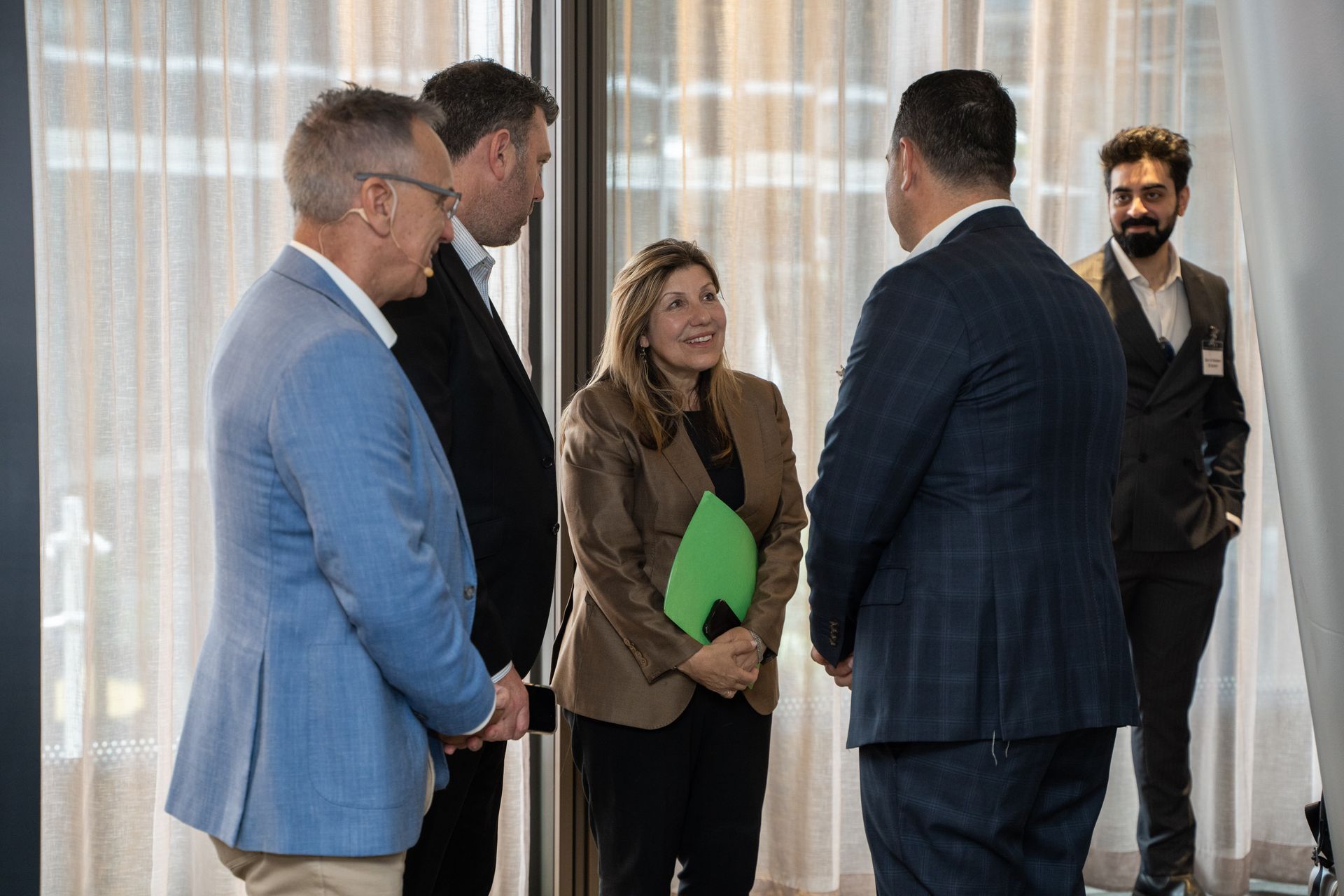
At the Zenergy Leaders Forum: WHS Legislative and Industry Update, industry leaders, government representatives, and policy experts unpacked the future of WHS in Australia — from psychosocial safety and regulatory reform to the realities of leadership responsibility.
This report highlights the key insights and discussions shaping the next chapter of safe and sustainable work.
A Stronger Framework for Enforcement and Collaboration
The Hon. Sophie Cotsis MP, Minister for Industrial Relations and Minister for Work Health and Safety, opened the forum with a clear message: enforcement and collaboration must go hand in hand.
“Work health and safety isn’t just a regulatory obligation — it’s a shared responsibility,” Minister Cotsis said.
Minister Cotsis outlined the NSW Government’s approach to reform, built on stronger enforcement, enhanced collaboration, and a renewed focus on fairness. Central to this strategy is the establishment of a standalone WHS regulator with increased inspection capability, alongside a tripartite advisory committee bringing together industry, unions, and families of workers affected by fatal incidents.
The Minister also addressed the government’s commitment to addressing psychosocial risk — an area now recognised as integral to business performance — and highlighted several key initiatives:
- The creation of a Silica Worker Register to monitor and protect employees in high-risk environments.
- Planned amendments to the Dust Diseases Act to better support younger workers diagnosed with silicosis.
- A workers’ compensation reform package aimed at improving support for psychosocial injury claims.
Cotsis also reaffirmed the government’s focus on education and proactive engagement, noting that SafeWork NSW is increasing tailored outreach programs and leadership mentoring for employers.
“We’re not just enforcing — we’re listening,” she said. “Tell us what’s working, and tell us what isn’t. We want to fix it together.”
Legal Accountability and Industrial Manslaughter: Leadership Under Scrutiny
In one of the forum’s most discussed segments, Katherine Morris, Partner at Norton Rose Fulbright Australia, explored the legal implications of Australia’s WHS reforms — particularly around industrial manslaughter provisions, board accountability, and director oversight.
Morris explained that regulators are moving decisively toward a culture of personal responsibility at the highest levels of governance.
“Regulators are increasingly focused on leadership responsibility,” she said. “The best leaders aren’t waiting for enforcement — they’re taking ownership of safety as a core value.”
She noted that recent and upcoming legislative updates will further elevate the expectations on executives and board members to demonstrate active WHS oversight, shifting from reactive compliance to visible leadership.
In particular, Morris cautioned that the introduction of industrial manslaughter provisions across multiple jurisdictions, coupled with inconsistent state-based laws, will continue to challenge large organisations seeking alignment.
“Harmonisation remains critical,” she added. “Directors can no longer rely on delegation — they must show due diligence in every decision affecting health and safety.”
Her remarks reinforced that cultural maturity and legal compliance must progress in tandem. A positive safety culture — one built on consultation, empowerment, and transparency — is increasingly being recognised as both a legal necessity and a competitive advantage.
National Harmonisation and the Evolving WHS Framework
Representing the national perspective, Angela Wallbank, Executive at Safe Work Australia, spoke about the ongoing process of harmonising WHS laws and the agency’s work in reviewing the model WHS framework.
Wallbank acknowledged that while the model laws have brought Australia closer to national alignment, differences still exist between jurisdictions — particularly around industrial manslaughter, psychosocial safety, and enforcement powers.
“Businesses want clarity and practical guidance,” Wallbank said. “We’re working to make compliance simpler, clearer, and more consistent across the country.”
She noted that psychosocial safety has become one of the most significant developments in modern WHS regulation. Safe Work Australia data shows that serious mental health-related claims have increased by 46% year-on-year, costing employers four times as much and keeping employees off work five times longer than physical injury claims.
Wallbank emphasised that addressing these risks isn’t about adding complexity — it’s about integrating psychological and physical safety into one holistic framework.
“Psychosocial safety isn’t a distraction,” she explained. “It’s an essential part of how modern organisations perform and sustain their people.”
Beyond Compliance: What Leaders Can Do Now
As WHS regulation continues to evolve, the forum discussions made one thing clear — the next phase of reform will demand stronger leadership and a deeper commitment to culture.
Based on the insights shared by Minister Cotsis, Morris, and Wallbank, organisational leaders should consider the following actions to stay ahead in 2025:
- Review board and executive WHS governance
Ensure directors are actively overseeing WHS performance and demonstrating due diligence in decisions impacting safety. - Integrate psychosocial risk management
Embed psychological safety into existing systems and include it in leadership training, audits, and risk reviews. - Stay informed on legislative change
Monitor developments in industrial manslaughter laws, harmonisation updates, and state-specific compliance requirements. - Strengthen consultation and engagement
Reinforce communication channels with workers, health and safety representatives, and regulators to align on shared goals. - Invest in capability and culture
Build leadership and workforce capability around safety, trust, and accountability — turning compliance into culture.
Leading the Future of Safe Work
The Zenergy Leaders Forum reinforced that meaningful progress in workplace health and safety requires connection — between policy and practice, business and government, and leaders and their people.
For Zenergy, fostering these discussions is part of our broader mission: to connect people and culture to safer, healthier, and more sustainable outcomes.
As Australia moves into a new era of WHS reform, the path forward will be defined not just by regulation, but by leadership.
Partner with Leaders in HSE Recruitment
As WHS reform continues to evolve, finding the right leaders to drive safety, culture, and compliance has never been more critical.
Zenergy specialises in HSE recruitment, connecting organisations with exceptional professionals who bring both technical expertise and the leadership capability needed to navigate change and influence safe, sustainable workplaces.
Whether you’re building your HSE function, seeking interim solutions, or looking for trusted advice on market trends and salary benchmarking, our team is here to help.
Discover how Zenergy can strengthen your HSE team:
Explore HSE Recruitment Services
Submit an Enquiry
Contact Us
Zenergy News