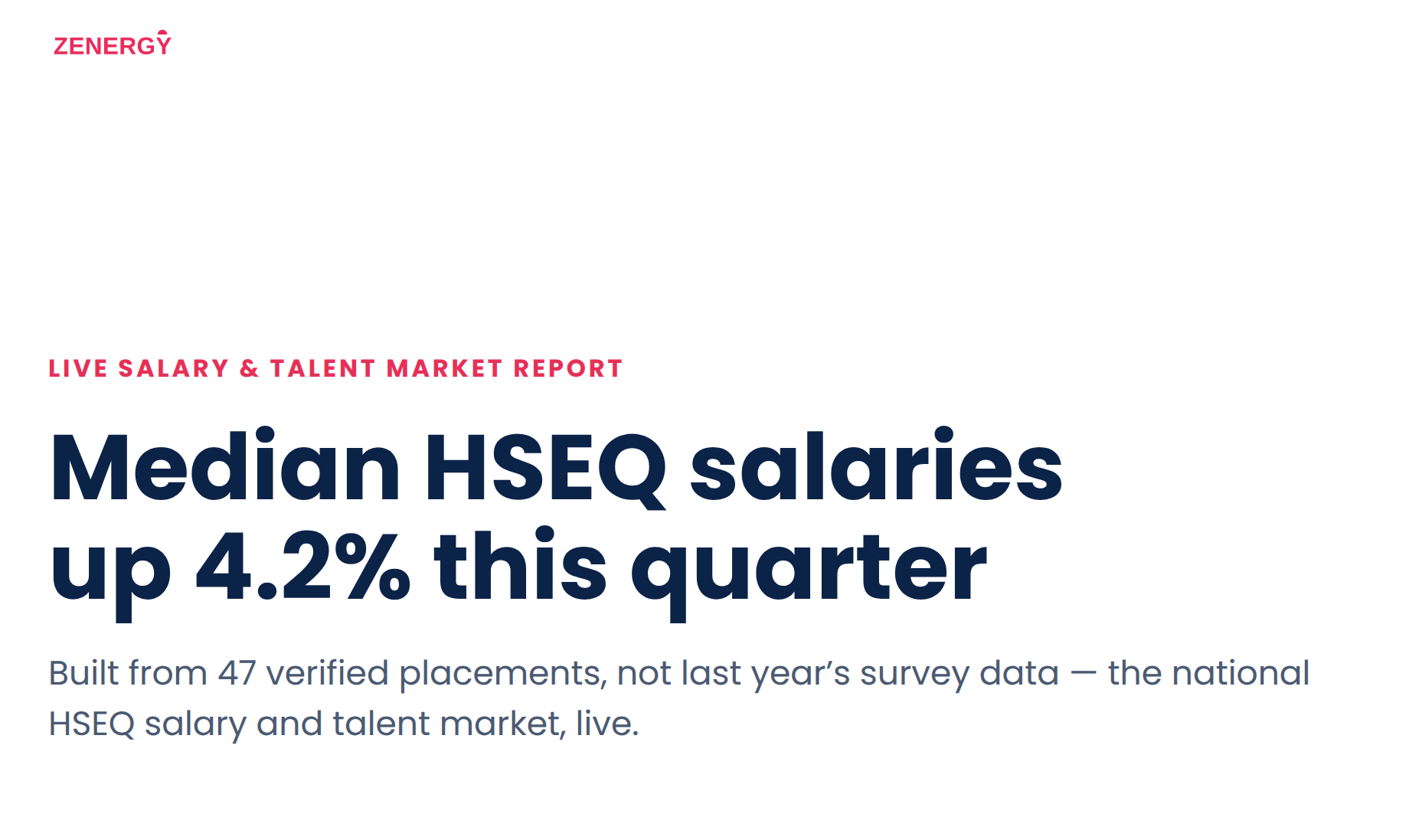
Workplace Health, Safety & Sustainability Salaries in Australia 2026

Working in Workplace Health & Safety is more than a job—it’s a profession dedicated to protecting people, shaping positive workplace culture, and supporting business success. In 2026, health & safety roles are increasingly critical across Australia, driven not only by compliance requirements but also by the growing focus on safety, wellbeing, and sustainability as key organisational priorities.
This snapshot examines how salaries for WHS roles compare across Australia’s major cities—Sydney, Melbourne, Brisbane, Perth, Adelaide, and Canberra—while exploring the factors influencing pay trends and highlighting where the strongest career opportunities are emerging.
Capital City Salary Ranges – WHS Roles (2026)
| City | Entry-Level WHS Officer | WHS Advisor/Coordinator | WHS Manager | Head of HSE / Director |
|---|---|---|---|---|
| Sydney | $85k – $100k | $105k – $135k | $140k – $170k | $200k – $280k+ |
| Melbourne | $80k – $100k | $105k – $125k | $130k – $160k | $190k – $270k+ |
| Brisbane | $75k – $90k | $95k – $125k | $125k – $155k | $185k – $235k+ |
| Perth | $80k – $100k | $105k – $130k | $130k – $170k | $200k – $260k+ |
| Adelaide | $80k – $90k | $95k – $125k | $125k – $155k | $190k – $230k+ |
| Canberra | $75k – $95k | $100k – $120k | $130k – $160k | $180k – $220k+ |
Note: These salary bands reflect base + super and vary based on industry, project type, and experience.
Key Economic Drivers Impacting WHS Roles in 2026
The Australian economy is evolving rapidly, and these trends are shaping demand and pay for Workplace Health & Safety professionals:
Business Investment & AI Boom
- Data Centres & Technology: Investment in AI-related infrastructure, particularly data centres, is booming, driving strong non-mining business investment.
- Energy Transition: The renewable energy sector is in a major building phase, with a $170 billion pipeline of wind, solar, and battery projects supported by government and private capital.
Population Growth & Housing Market
- High Migration: Strong, consistent population growth keeps demand high, contributing to long-term job growth.
- Housing Shortage: Chronic undersupply and high demand are pushing home prices up, supporting residential investment with prices forecast to rise 6–8% in 2026 in some cities.
Mining & Resources (Transitioning)
- Commodity Volume: Production remains high, even with softening prices for iron ore, coal, and LNG, keeping the resources sector a critical contributor to income and trade.
- Diversification: Services sectors like health and finance are expanding, reducing dependence on commodity cycles.
Services Sector Expansion
- Health & Care: NDIS and broader healthcare spending drive employment and economic activity.
- Finance & Professional Services: Digital transformation and demand for financial services are creating new opportunities.
Public Sector Spending
- Infrastructure & Services: Strong public demand in health, education, and infrastructure continues to support the economy.
Tips to Boost Your WHS Career & Salary
- Upskill Smartly: A Diploma or Grad Cert in WHS or HSE is a baseline—consider adding ESG, leadership or psychosocial safety credentials to future-proof your career.
- Target High-Risk Sectors: Construction, energy, infrastructure, healthcare, and government are consistently among the best-paying industries for WHS roles.
- Build Soft Skills: Communication, influence, and stakeholder engagement are now just as important as technical compliance. Strong interpersonal skills set high performers apart.
- Follow the Market: Stay active with industry forums and governing bodies including the Australian Health & Safety Institute (AIHS). Roles in renewables, wellbeing, and hybrid workforce safety are growing fast.
What This Means for Employers & Candidates
For Employers
Hiring remains competitive. To attract quality WHS talent, organisations must offer clear career development, purpose-led culture, flexible work options, and visible wellbeing commitments.
For Candidates
It’s a strong job market. Candidates with industry-specific experience (construction, energy, healthcare), psychosocial risk skills, and those investing in continuous development are seeing multiple offers and upward mobility.
Outlook: 2026 & Beyond
With organisations facing growing pressure to create safer, healthier, and more sustainable workplaces, WHS professionals are increasingly taking on strategic and influential roles. As a result, health and safety practitioners are well-positioned for continued career growth, with the second half of 2026 expected to bring expanding opportunities in renewable energy, government projects, and ESG-focused safety leadership.
As the demand for WHS and sustainability professionals continues to rise, securing the right talent requires more than just a job ad—it demands market insight, speed, and a strong employer brand. Whether you're hiring for a key safety role, building a wellbeing team, or integrating ESG into your organisation, Zenergy can help.
We connect Australia’s top HSE talent with forward-thinking employers.
Get in touch today to discuss your hiring needs and access candidates who are ready to lead safety and sustainability in 2026 and beyond.
📩 Contact us at
info@zenergygroup.com.au or call us at
1300 333 400.
Contact Us
Zenergy News