Challenge to mandatory vaccinations fails in court

Two groups of workers in New South Wales who refused COVID-19 vaccinations initiated legal proceedings against the NSW health minister and chief medical officer, the State and the Commonwealth. They claimed that the public health orders restricting the rights of unvaccinated individuals are invalid, unreasonable, beyond the scope of the public health laws, made for improper purposes and don’t give them natural justice. The Supreme Court of NSW has examined their claims and rejected them all.

The anti-vaccination claims


The main focus of the two proceedings was the orders preventing ‘authorised workers’ from leaving an affected ‘area of concern’ where they live, and preventing unvaccinated people from working in the construction, aged care and education sectors.


The first group of workers claimed that the health minister did not have the power to make those public health orders. They claimed the orders were either outside the scope of the Public Health Act 2010 or unreasonable because of the effect on fundamental rights and freedoms – especially their right to their own bodily integrity.


The second group claimed that because of the impact on their rights and freedoms, the public health orders were made for an improper purpose, and that the minister had failed to have regard to relevant considerations, asked the wrong questions, acted unreasonably and failed to afford them natural justice.


The plaintiffs also asserted that the orders were inconsistent with the immunisation register legislation and that they implemented ‘civil conscription’ (obliging civilians to perform compulsory service for the government), which is inconsistent with the Australian Constitution.


The groups included the director and OHS officer of a supplier to Sydney construction sites, three aged care workers, a teacher, a cleaner, a mechanic, a hospital employee and a pregnant health care worker employed by a pathology agency.


Both groups contended that the practical effect of the orders was to force people to get vaccinated or lose their jobs, and that therefore they won’t have been exercising a free choice in consenting to be vaccinated.

Their objections included statements that they have ‘the right to make [their] own medical decisions alongside medical professionals’, a ‘basic human right … to bodily integrity’, and beliefs that COVID-19 vaccines do not provide immunity or lessen transmission rates, and that they carry risks of adverse reactions.

Efficacy and side effects of the COVID-19 vaccines


The court considered affidavits and evidence from a number of medical experts expressing a range of views. On the basis of their respective qualifications and how they were able to substantiate their opinions, the Judge accepted the view supported by the weight of proper scientific opinion that COVID-19 vaccines reduce the risk of infection and transmission of the disease, attenuate the symptoms and possible consequences, and generally have only mild to moderate short-term side effects.

Violating bodily integrity and restricting freedom of movement


The claim here was that individuals should not be coerced into being subjected to a medical treatment, and that such coercion violates their right to bodily integrity.


The Judge formed the view that the public health orders do not amount to a violation of anyone’s right to bodily integrity, because the orders do not authorise involuntary vaccination. Instead, the public health orders impede unvaccinated people’s freedom of movement, which has consequences for their ability to work.


The court concluded that though the public health orders curtail freedom of movement which in turn affects a person’s ability to work and socialise, this does not mean the orders are invalid or unreasonable.


If the orders had curtailed freedom of movement based on some arbitrary ground such as race, gender or political opinion, it could well have been considered unreasonable and invalid.


‘However, the differential treatment of people according to their vaccination status is not arbitrary’, the Judge said, because the ‘material difference between being a person who is vaccinated and a person who is unvaccinated …[is] … the degree of transmission threat they represent to others’.


‘Freedom of movement is undoubtedly important’, he wrote, but it’s ‘not necessarily [a] positive right’. Regardless, the Public Health Act clearly authorises curtailing that freedom, sometimes severely.

The health minister did not act unreasonably in considering the public health orders necessary to deal with the identified risk to public health and its possible consequences.


The court rejected all the grounds for the court actions, and dismissed the proceedings.


The bottom line: The public health orders restricting the freedom of unvaccinated people’s movement were legally valid, and reasonable.

Read the judgment


TAG :- Covid-19, Vaccination

Contact Us

Zenergy News
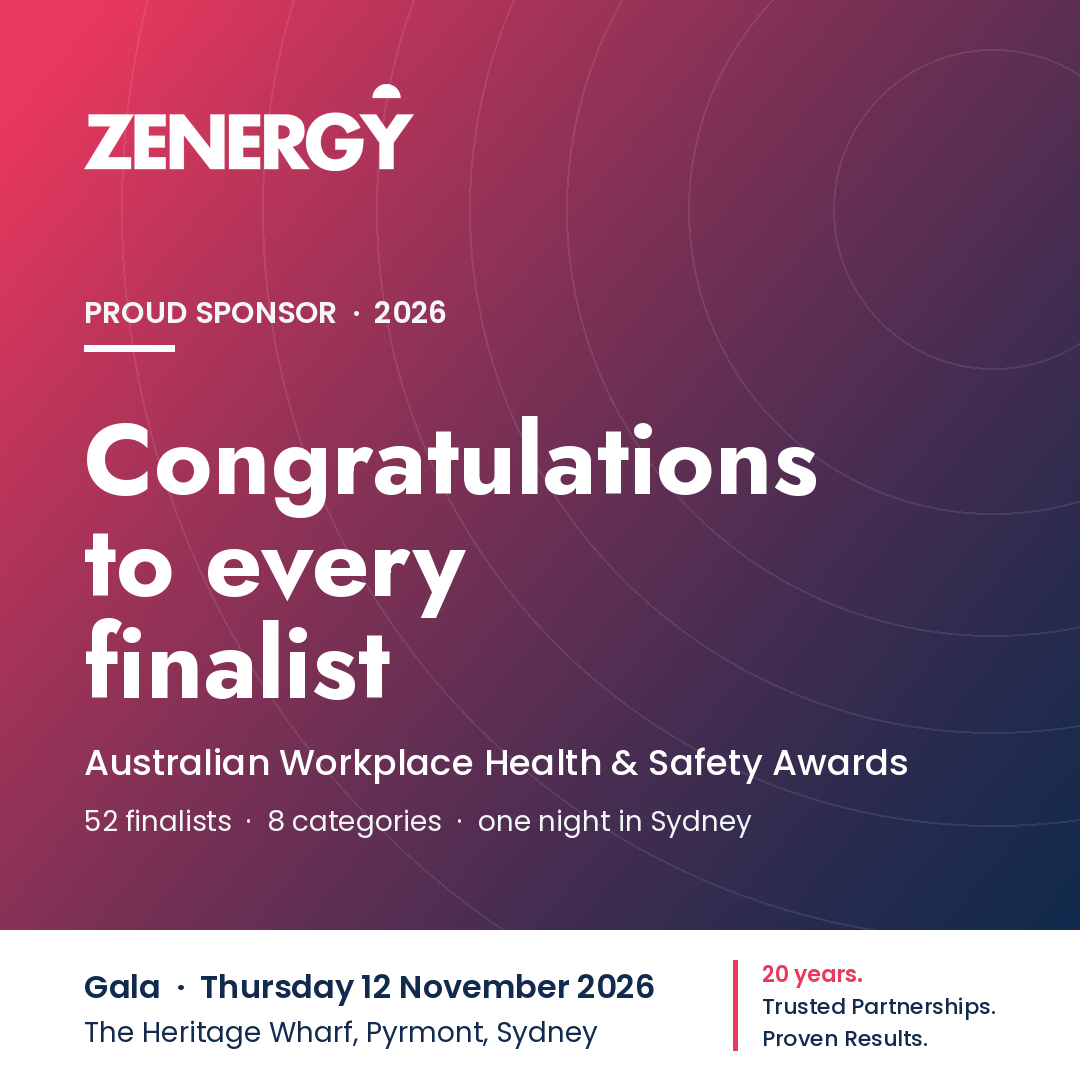
Zenergy Congratulates the 2026 AWHSA Finalists
By Dean Woods • October 13, 2026
Zenergy is proud to sponsor the 2026 Australian Workplace Health & Safety Awards. Meet the 52 finalists ahead of the Sydney gala on 12 November.
By Dean Woods • October 13, 2026
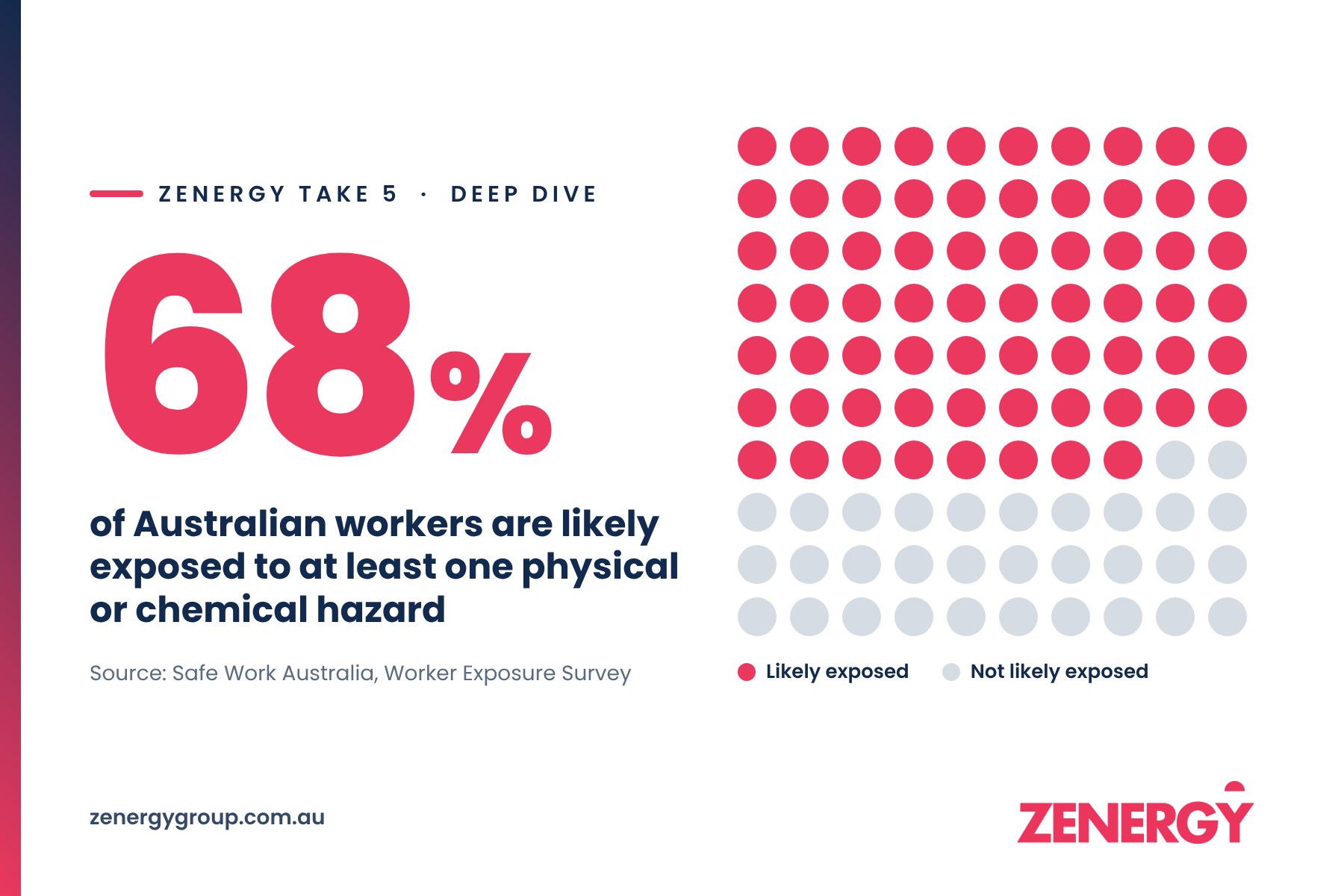
Welcome to Take 5, Zenergy's weekly five-minute scan of what's moving in Australian workplace health and safety, workers compensation and people & culture — five items, one featured senior role, every source named. This week: a hard regulatory deadline lands on the calendar, Safe Work Month hits its stride, and Safe Work Australia publishes the clearest picture in years of who is actually exposed to harm at work. 1. New workplace exposure limits commence 1 December — including Australia's first diesel particulate limit The transition period for Safe Work Australia's updated workplace exposure limits (WELs) for airborne contaminants ends on 1 December 2026. The list introduces Australia's first national exposure limit for diesel particulate matter — 0.01 mg/m³, measured as respirable elemental carbon — alongside revised limits for a range of other contaminants. Regulators are telling duty holders to use the remaining weeks to review exposure monitoring, confirm controls are effective, and prioritise elimination and engineering controls over reliance on RPE. If your operations involve diesel plant in enclosed or poorly ventilated environments — distribution centres, tunnels, underground mining, workshops — this is the compliance item to table at your next leadership meeting. Safe Work Australia has published guidance and a transition toolkit, and state regulators including SafeWork SA have flagged the change, as has NOPSEMA for offshore operators. Sources: Safe Work Australia — Changes to Workplace Exposure Limits (safeworkaustralia.gov.au); SafeWork SA — Get ready for new Workplace Exposure Limits (safework.sa.gov.au); NOPSEMA — Diesel engine emissions: new workplace exposure limit takes effect December 2026 (nopsema.gov.au). 2. Dates ahead: Safe Work Month's “for health” week and World Mental Health Day National Safe Work Month is underway, with Safe Work Australia's 2026 theme “Safe work is for life” running week-by-week focuses: “for health” (week two, this week), “for the future” (week three) and “for all” (week four). World Mental Health Day falls on Saturday 10 October, inside Mental Health Month — a natural prompt to put psychological health on the toolbox agenda, not just the poster wall. Regulators are active too: SafeWork NSW opened the month with a compliance operation targeting the meat processing sector. Sources: Safe Work Australia — National Safe Work Month (safeworkaustralia.gov.au/national-safe-work-month); SafeWork NSW — news, 1 October 2026 (safework.nsw.gov.au). 3. People & culture: FWO recovers $453 million for workers in 2025–26 The Fair Work Ombudsman's 2025–26 results, released 14 September, show $453 million recovered for underpaid workers across the year, with Ombudsman Anna Booth urging employers to find “compliance common ground”. For employers, the signal hasn't changed: payroll governance, award classification and record-keeping sit alongside WHS as enterprise-level compliance risks — and the regulator's recovery capability keeps growing. Worth a standing item on the people & culture risk register, especially for businesses with large award-covered or labour-hire workforces. Source: Fair Work Ombudsman media release, 14 September 2026 (fairwork.gov.au/newsroom). 4. Job market pulse: national vacancies ease, HSE demand holds The ABS's August 2026 Job Vacancies figures (released 1 October) show 325,000 vacancies nationally — down 0.9% over the quarter and 1.3% over the year, and 31.2% below the May 2022 peak. Private sector vacancies fell 2.0% for the quarter while public sector vacancies rose 7.8%. Health care and social assistance remains the deepest vacancy pool at 54,300. Against that gently easing backdrop, safety hiring is holding its ground from WHS advisors in Melbourne manufacturing to safety leadership in Queensland logistics — a spread we read as steady, sector-broad demand for proven operators rather than a hiring spike. Sources: ABS — Job Vacancies, Australia, August 2026 (abs.gov.au); 5. Industry story of the week: 68% of workers likely exposed to at least one hazard Safe Work Australia's newly published Worker Exposure Survey finds 68% of Australian workers are likely exposed to at least one physical or chemical hazard at work, with 28.9% experiencing high-level exposure. Solar UV is the most common hazard (an estimated 4.87 million workers), silica exposure covers an estimated 2.04 million workers and is heavily concentrated in construction and mining, and apprentices and trainees are disproportionately exposed across heat, silica, lead and asbestos. Construction, agriculture and mining are the industries most likely to see multiple hazard exposure. It's the week's most important read for HSE leaders — and the subject of this week's Zenergy deep-dive, where we unpack what the numbers mean for exposure monitoring, young-worker supervision and the 1 December exposure limit deadline. Sources: Safe Work Australia — Worker Exposure Survey (safeworkaustralia.gov.au); Safety Solutions, 28 September 2026 — “Over two-thirds exposed to a physical or chemical hazard, workers survey reveals”
By Dean Woods • October 7, 2026
Safe Work Australia's Worker Exposure Survey finds 68% of workers exposed to hazards. What HSE leaders should do before new limits land on 1 Dec.
City skyline at sunset with tall modern buildings under a colorful orange and blue sky
September 16, 2026
Explore the latest Safe Work Australia updates for 2026, including WHS penalties, incident notification, AI, chemical exposure limits and regulatory changes.
Worker in white hard hat and glasses speaking on a factory floor, with colleagues blurred in the background
September 9, 2026
Should you hire an HSE contractor or permanent HSE Manager? Explore when interim HSE solutions make sense for Australian businesses, projects and temporary vacancies.
HSEQ salary bands by role, Australia Q4 FY2026 – Zenergy
By Dean Woods • September 7, 2026
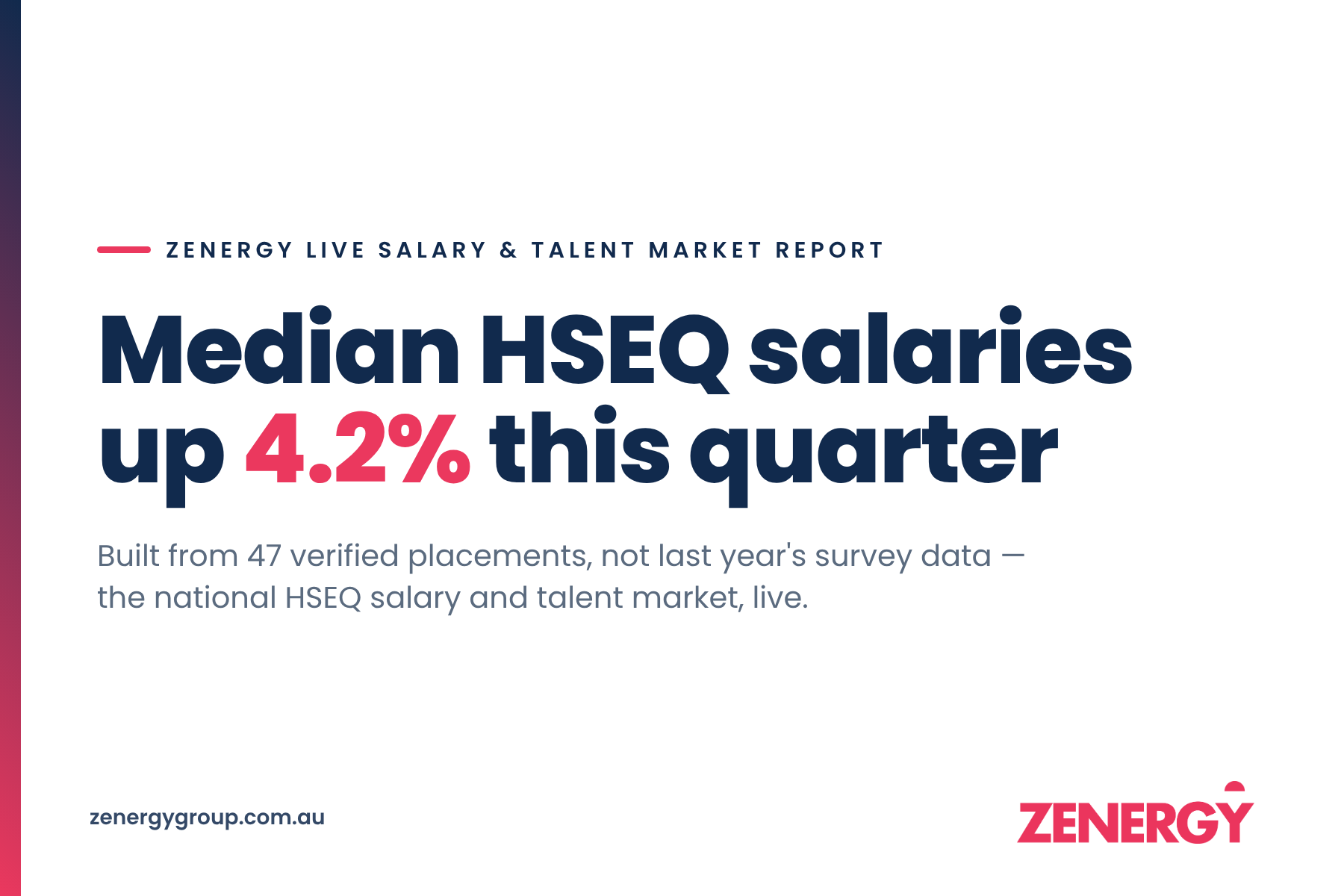
See live HSEQ salary data from 47 verified Zenergy placements — HSE Manager, WHS Advisor and Head of HSEQ pay bands, by city and company size.
More Posts