Behind the Scenes at Swissport: A Site Tour at Sydney Airport - International
With Tony Filacouridis Head of HSEQ Asia Pacific Region at Swissport
Garry Kelly Director at Zenergy

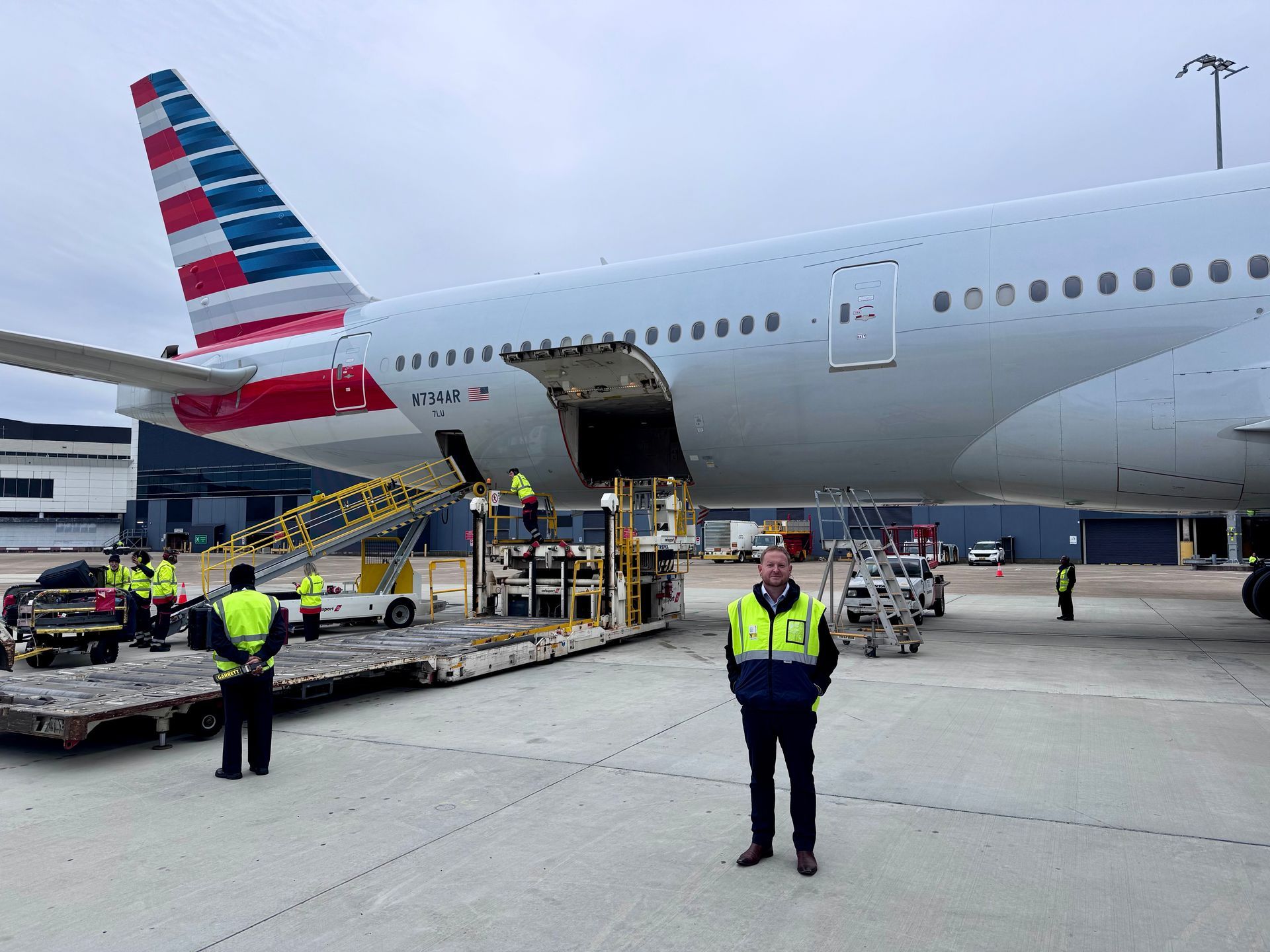
Last week in July 2025, I had the opportunity to join a site tour of Swissport’s operations at Sydney Airport International Terminal, with Swissport executive Tony Filacouridis. It was an eye-opening experience that showcased the scale, precision, and teamwork required to keep the world moving.
The tour began landside with extensive security checking, before we were escorted airside, stepping directly onto the tarmac where arriving and departing flights were in full swing. Tony Filacouridis is Swissport’s Head of Health Safety Environment & Quality for Asia Pacific region and providing context he explained that in 2024, Sydney saw 16.3 million international passengers. Swissport managed over 53,000 aircraft movements. We watched ground crew unload baggage with speed and care, guiding containers from aircraft holds onto awaiting tugs. The choreography between baggage handlers, ramp agents, and aircraft service staff was seamless – movements carefully timed to ensure tight turnaround schedules are met. Baggage handlers in particular, work in a high-risk, high-pressure environment, they are responsible for ensuring that luggage and freight is loaded and unloaded efficiently, securely, and safely. Often in extreme weather conditions on the tarmac early in the morning and late in the evening.
Safety First
I asked Tony, ‘what is the philosophy or method of keeping employees safe at Swissport?’
Tony’s response was; “At Swissport, safety is everyone's responsibility and our highest priority. Our approach is built on strong management safety leadership, thorough risk assessment, regular team training, accessible incident reporting, and continuous improvement. We foster a culture where all team members are empowered to speak up about safety concerns, creating trust and reinforcing our shared commitment to a safe working environment. Preventing workplace incidents is fundamental to our values, and we always prioritize safety over on-time performance—because every team member makes a difference”

Tony Filacouridis
Head of HSEQ Asia Pacific at Swissport
Before anyone is allowed near aircraft, safety briefings and PPE checks are mandatory. High-visibility vests, ear protection, and radios are standard issue. I saw teams communicating constantly, using radios, hand signals, and visual awareness to keep one another safe.
Key safety procedures in action included:
- Team lifting procedures and mechanical aids, such as belt loaders, used to protect workers from musculoskeletal injuries.
- ‘Safety zones’ around the aircraft, clearly marked and strictly observed to avoid LV and Mobile plant hazards.
- Clear chocks and cones procedures, ensuring the aircraft remains stationary during loading and that a safety clearance zone is created to prevent aircraft damage..
- Vehicle speed limits and designated driving lanes on the apron to minimise collision risks.
It was also impressive to see a “buddy system” in place—where more experienced crew who are promoted over time to ‘Leading Hands’ monitor newer staff to ensure procedures were followed.
One of the more fascinating parts of the day was observing the refuelling process up close. Tanker trucks manoeuvred alongside wide-body aircraft, connecting hoses under strict safety protocols to replenish fuel reserves quickly. Simultaneously, catering vehicles were delivering meals to outbound flights, while cleaning teams boarded to prepare cabins for new passengers, all within narrow departure windows.
Clear communication and safety culture was embedded in every task. Marshallers directed aircraft with focus, while team leaders checked and rechecked procedures, ensuring both people and planes remained safe. Every employee we spoke to took great pride in their work, recognising their role in contributing to the broader safety and success of the aircraft, passengers, and airport operations.
Work behind the scenes
This site tour provided an authentic glimpse into the critical work Swissport performs behind the scenes to keep flights on schedule while the organisation works diligently to keep workers safe. Watching baggage, fuel, catering, and cleaning crews work collaboratively highlighted the meticulous work Swissport and the HSEQ function does to support Sydney Airport.
Contact Us
Zenergy News