
Catherine Gale’s career began in environmental engineering and has since spanned energy, mining, construction and rail, where she now leads health, safety and sustainability at Beon Energy.
Women in Safety: Leadership, Culture and the Future of Work
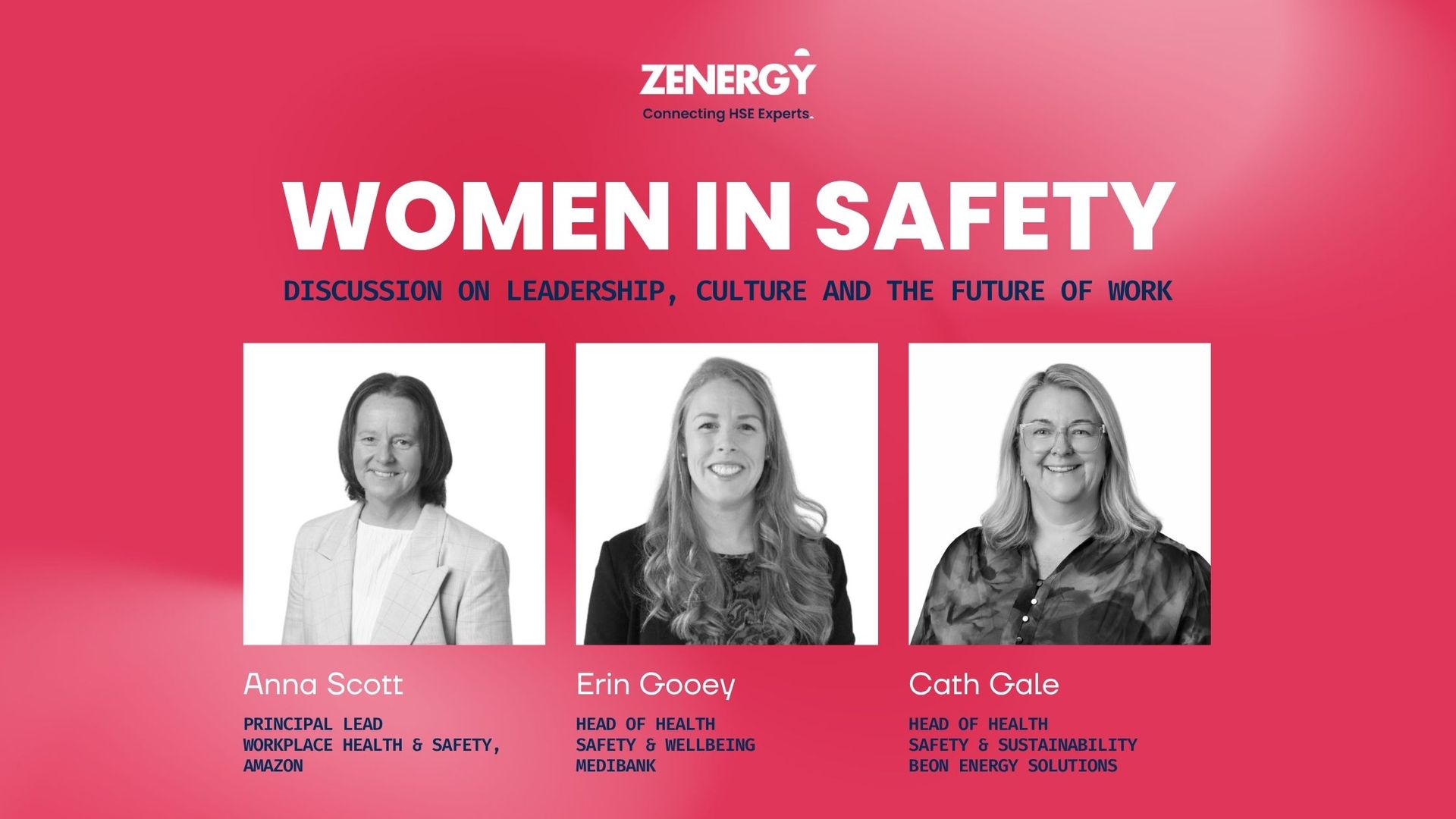
The safety profession has evolved significantly over the past decade.
Once defined primarily by compliance and operational control, it is now increasingly shaped by leadership, culture and a deeper understanding of people. As organisations face more complex risks, safety is no longer just about systems, it’s about how those systems reflect the realities of work.
This shift is evident in the experiences of leaders working across some of the most complex and high-risk environments.


Erin Gooey, Head of Health, Safety and Wellbeing at Medibank, started in allied health before building a career across organisations such as Rio Tinto, Coles and Officeworks, with a focus on connecting strategy to lived experience.
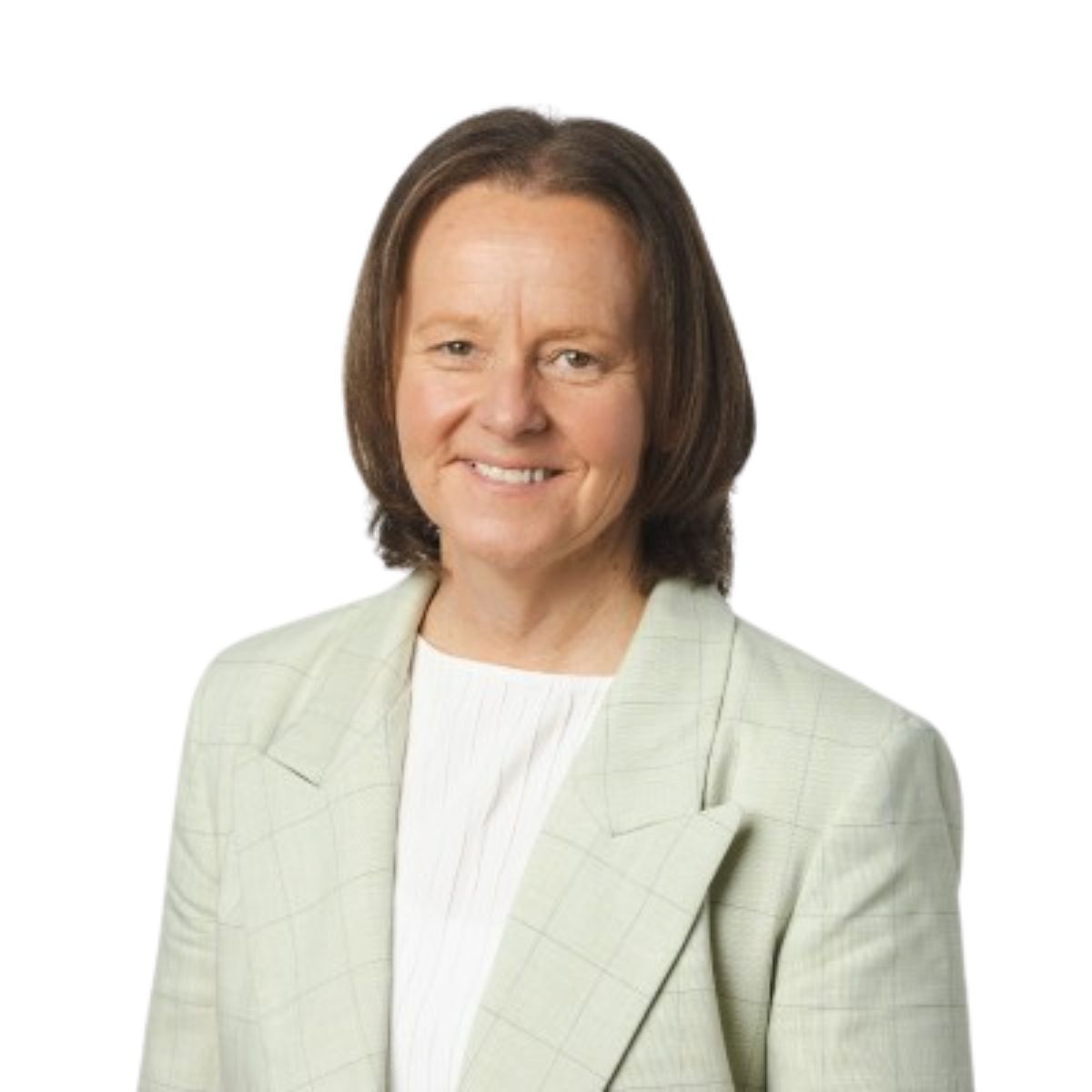
Anna Scott, now Principal Lead for Workplace Health and Safety at Amazon, has spent more than 20 years working across government, transport and retail, including in executive and board-facing roles.
While their paths have taken different directions, their reflections point to a consistent shift in how safety leadership is understood and applied, one that places greater emphasis on credibility, adaptability, inclusion and the realities of modern work.
Credibility Is Built Early and Demonstrated Through Action
For each of these leaders, early career experiences were shaped by working in traditionally male-dominated environments, from mining through to infrastructure and heavy industry. Across their stories, credibility was not something that came automatically, it was something built over time through consistency, capability and approach.
Anna reflects that there were moments early on where she had to establish herself more deliberately, particularly in operational settings where safety leadership had historically been male dominated. “Early in my career there were certainly moments where I had to establish credibility more deliberately… particularly in operational environments where safety leadership had historically been male dominated.”
What made the difference was not just technical knowledge, but how that knowledge was applied. As she explains, “bringing strong technical knowledge, a clear strategic perspective and an ability to engage people constructively quickly built trust.”
For Catherine, the challenge often came when moving between industries, where experience was not always immediately recognised as transferable. “Often when I changed industries, I was told that I needed to get experience in that particular industry rather than recognising that my skills were transferable.” Over time, however, this became an advantage. “It ended up working in my favour as it was very easy to exceed early expectations.”
Erin’s early experience in mining reflects a similar pattern, though her approach was grounded in openness and learning. “Leading with curiosity and being honest that I didn’t know everything but was willing to learn helped build relationships and trust.”
Across all three perspectives, credibility is not framed as something withheld, but something that had to be actively demonstrated, often early, and often in environments where assumptions already existed.
Leadership Is Contextual, Not Performative
As their careers progressed, leadership did not emerge as something fixed, but something shaped by environment, people and context.
Rather than describing a need to change who they are, each leader spoke about adapting how they lead depending on the situation. For Anna, leadership in safety is ultimately about influence, about understanding how work is actually done and engaging people in a way that is both practical and respectful. “Safety leadership is ultimately about influence… it’s important to engage people practically and respectfully, understand the realities of the work and involve teams in developing solutions.”
Catherine echoes this idea, noting that while her core leadership approach has remained consistent, the way it is applied has needed to flex. “I don’t really think I changed my leadership style, but different teams and contexts require flexibility.”
For Erin, this adaptability is central to building trust and delivering outcomes. “Being able to adapt communication style, influence approach and decision-making methods has often been advantageous helping to build credibility, foster trust and drive outcomes.”
What emerges is a clear shift in how leadership is understood within safety. It is less about authority or control, and more about influence, trust and the ability to respond to complexity.
Diversity Improves How Risk Is Understood
The role of diversity in shaping safety outcomes is another area of strong alignment across all three leaders.
Rather than viewing diversity as a standalone initiative, it is consistently described as something that strengthens how organisations think about risk. Different backgrounds and experiences bring different perspectives, which in turn lead to more considered and effective decision-making.
Anna points to the quality of discussion that diversity enables. “When leadership teams include people with different backgrounds and experiences, they tend to have richer discussions about risk, decision making and human factors.”
Catherine links this directly to the evolution of safety itself, particularly the move toward more people-centred approaches. “A more contemporary safety approach is having a more people centric approach rather than a compliance focus… women often have a more empathetic approach which helps create a more positive safety culture.”
Erin reinforces this from a practical standpoint, highlighting how diversity shapes the way risks are identified and managed. “Gender diversity brings a wider range of perspectives, communication styles and lived experiences, which influences how risks are identified and managed.”
Together, these insights position diversity not as symbolic, but as a structural contributor to better safety outcomes.
When Diversity Is Missing, So Are Critical Insights
Where diverse perspectives are absent, gaps begin to emerge, often in ways that are not immediately visible.
Several examples highlight how certain risks may be overlooked or insufficiently understood without a broader range of input. Anna notes that risk exposure itself can vary significantly depending on role and circumstance. “Workplace design, PPE, fatigue management and psychosocial risks can affect people differently depending on role and circumstances.”
Catherine focuses on the impact this has on conversation and decision-making. “When you don’t have gender diverse teams there is a risk that important issues are not discussed.”
Erin draws particular attention to psychosocial risk, where lack of visibility can have serious implications. “This is particularly true of psychosocial risks like sexual harassment and gendered violence—making them more likely to go unrecognised or minimised without diverse voices.”
The pattern is clear. Without diversity, it is not necessarily that systems fai, it is that certain risks never fully enter the conversation in the first place.
Designing Safety Systems Around Real People
As the profession evolves, so too does the expectation of how safety systems are designed.
Across all three perspectives, there is a strong emphasis on moving beyond standardised, one-size-fits-all approaches. Traditional systems often rely on assumptions about the workforce, but those assumptions no longer reflect reality.
Anna captures this shift simply. “WHS systems should be designed around people rather than assumptions.”
Catherine highlights how this plays out in practice, particularly when considering different life stages. “Understanding the physical challenges women experience during different stages of life such as pregnancy, parenting, perimenopause and menopause.”
Erin extends this further, emphasising the need to remove the burden from individuals. “Policies should account for differences in physical design, work exposure and lived experience… and remove the burden on individuals to self-advocate.”
What emerges is a more nuanced approach to safety design, one that reflects the diversity of the workforce rather than expecting individuals to adapt to predefined systems.
Progress Is Real, but Not Even
There is clear evidence that gender diversity within the safety profession has improved over time, particularly at leadership level. However, the extent of that progress varies.
Anna reflects on the change she has seen across her career. “There are many more women in safety leadership roles today than when I started my career.”
For Catherine, the difference is particularly noticeable when compared to earlier stages of her career. “For the first 10 years of my career, I was often the only woman in the room. Now that is not the case.”
Erin offers a slightly different perspective, noting that her experience has been more consistent. “I’ve always experienced the WHS field as having a healthy level of gender diversity.”
Taken together, these perspectives highlight that while progress is real, it is not uniform across industries or organisations.
Career Transitions Remain a Key Risk Point
While more people are entering the profession, retaining and progressing talent remains an ongoing challenge.
Career transitions, particularly around parental leave, continue to be a critical moment where careers can either be supported or disrupted.
Erin speaks directly to this point. “Leaving the workforce to have a baby and returning after parental leave can be a critical and vulnerable point in any woman’s career.”
Catherine adds that structural barriers still exist in some environments. “There are still pockets of ‘old school’ thinking in certain industries… and we still lose talent because of this.”
Addressing these challenges requires more than policy. It requires a shift in how organisations support career continuity and recognise the long-term value of experience.
The Future of Safety Is Human-Centred
Across all three perspectives, one message is clear. Safety is no longer defined solely by systems and compliance.
It is increasingly defined by how well organisations understand people; their differences, their experiences and the realities of the environments they work in.
The future of safety will require more integrated, human-centred approaches that balance performance, wellbeing and organisational design. Technology will continue to play a role, but its greatest value will come from strengthening human judgement, not replacing it.
The organisations that will lead are those that design safety around people and continue to evolve as those people, and the nature of work itself, continue to change.
Contact Us
Zenergy News

Explore the latest Safe Work Australia updates for 2026, including WHS penalties, incident notification, AI, chemical exposure limits and regulatory changes.

Should you hire an HSE contractor or permanent HSE Manager? Explore when interim HSE solutions make sense for Australian businesses, projects and temporary vacancies.
See live HSEQ salary data from 47 verified Zenergy placements — HSE Manager, WHS Advisor and Head of HSEQ pay bands, by city and company size.

Why is HSE recruitment becoming harder in Australia? Zenergy shares 2026 insights on HSE talent shortages, contract hiring, salaries and candidate expectations.

Discover the hidden cost of leaving an HSE leadership role vacant, from project delays and regulatory risk to incidents, staff turnover and contractor management.

South Australia has laid its first industrial manslaughter charges. What the case means for directors, officers and HSE leaders — and five actions to take now.